The Cultural Downgrade and the Path to Renewal
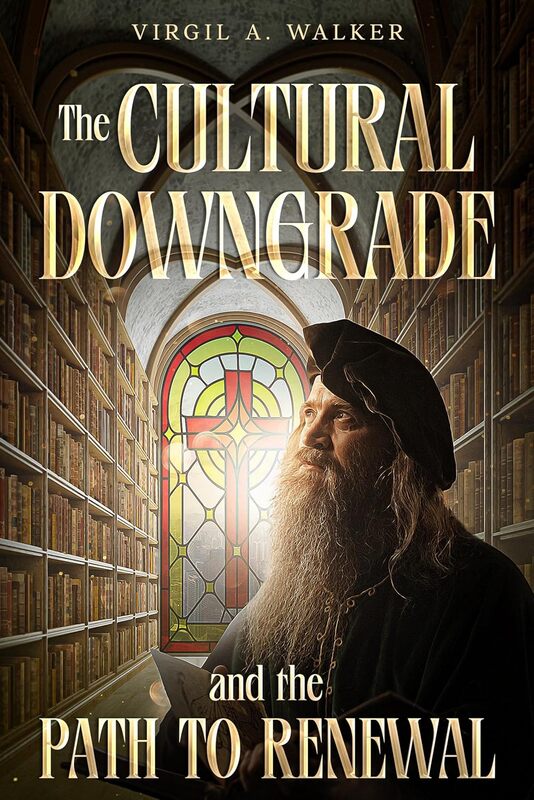
In an age where screens eclipse stories and algorithms drown out truth, The Cultural Downgrade and the Path to Renewal unveils the quiet unraveling of our cultural soul. Virgil A. Walker traces the erosion of folk and high culture—once the heartbeat of community and aspiration—through the decline of classical education and the rise of materialism. From the philosophical shift of nominalism to the corporate commodification of art, this book exposes how modern society has traded the timeless depth of Homer, Tolkien, and Scripture for fleeting pop culture spectacles.
Yet, amid this decay, Walker offers a hopeful vision rooted in Western Christian thought. Drawing on Augustine’s ordo amoris, Luther’s educational reforms, and C.S. Lewis’s warnings, he charts a path to reclaim the synergy of folk tales and high art. Through classical education, virtuous elites, and church-led renewal, we can resist the dystopian tide of rootlessness and elite corruption, rebuilding a society grounded in truth, beauty, and communal bonds.
With vivid insights and practical steps, this compelling call to action urges families, churches, and communities to revive our heritage and reform governance, ensuring a legacy that honors God’s eternal design. A must-read for those yearning to restore the soul of civilization.
The book argues that Western society in the mid-2020s suffers from serious cultural and spiritual decline. Key symptoms include falling literacy rates, heavy screen addiction among children, the near abandonment of classical education, the rejection of objective truth, goodness, and beauty, rampant materialism, algorithm-driven shallow pop culture, and widespread elite corruption.
Walker traces the intellectual roots of this “downgrade” to the medieval shift from Scholastic realism (which affirmed universal, God-given truths) to nominalism (which treated such truths as mere human labels). He contrasts the virtue-forming classical Trivium-based education of the Christian West with the utilitarian Prussian schooling model that prioritizes obedience and workforce preparation over moral and intellectual depth.
The book criticizes modern corporate media for flattening rich mythic stories (such as Tolkien’s works and the original Star Wars trilogy) into profit-focused spectacles, while praising examples where popular art still carries lasting moral weight. It also warns against hyper-individualism in non-denominational Christianity, crony capitalism, and the loss of objective beauty.
The proposed solution is a widespread revival of classical Christian education rooted in Augustine, Luther, Aquinas, C.S. Lewis, and contemporary Lutheran and Anglican models. This approach reunites folk culture (communal tales, hymns, crafts) with high culture (Great Books, philosophy, theology) in homes, churches, and schools. The goal is to rebuild moral imagination, discernment, transcendent values, and resilient communities that can resist secular relativism and cultural shallowness.


